Japanese kyusu teapots are traditional teapots designed for brewing Japanese green tea such as sencha, gyokuro, houjicha, and genmaicha. They are appreciated not only as practical tea utensils, but also as examples of Japanese craftsmanship, regional pottery traditions, and refined everyday design.
At Artistic Nippon, Tokoname kyusu form the core of our Japanese teapot selection. We also handle Banko, Hagi, Arita porcelain, and other Japanese teapots when we find pieces that meet our standards for quality, usability, and character.
This guide introduces the main types of Japanese teapots, regional differences, strainer types, and practical points to consider when choosing a kyusu for your own tea style.
What Is a Japanese Kyusu?
The word “kyusu” generally refers to a Japanese teapot. In English, it is often used especially for side-handled teapots used to brew Japanese green tea. The side handle allows the pot to be held comfortably and makes it easy to pour out the tea to the very last drop.
A good kyusu should not only look beautiful. It should feel balanced in the hand, pour smoothly, fit its lid well, and allow the tea leaves to open properly during brewing.
Types of Japanese Teapots
Teapots of many kinds are made throughout Japan. Some are made from unglazed clay, some from glazed stoneware, and others from porcelain. Each type has its own character, and many tea drinkers enjoy choosing different teapots for different teas.
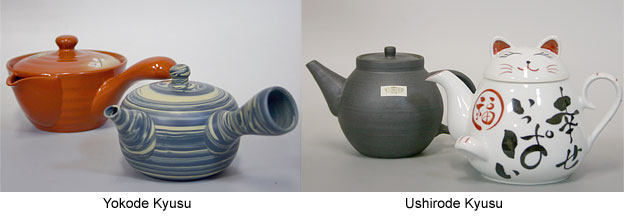
Yokode Kyusu
Yokode kyusu are side-handled teapots. This is the most familiar form of Japanese kyusu and is widely used for sencha. The design makes it easy to pour smoothly and control the flow of tea. Left-handed teapots also exist, although the selection is usually more limited.
Ushirode Kyusu
Ushirode kyusu have the handle at the back of the pot, similar to many Western teapots. They are easy to use for both right- and left-handed people and are a practical choice for those already familiar with Western-style teapots.
Uwade Kyusu
Uwade kyusu are teapots with handles attached above the pot. This style is especially practical for larger teapots because the top handle provides stability and tends to remain relatively cool during use. Dobin teapots are among the best-known examples of uwade style teapots.
Dobin
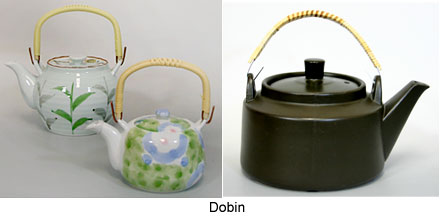
Dobin originally referred to heat-resistant pots used for boiling water or brewing medicinal herbs. Today, the term is also used for teapots of similar shape made from porcelain or clay. Many dobin teapots are fitted with bamboo or rattan handles and are popular for serving tea to several people.
Houhin and Shiboridashi

Houhin and shiboridashi are handleless Japanese teapots often used for high-grade teas such as gyokuro and fine sencha. They are usually small and are designed for careful brewing with lower water temperatures and concentrated flavour.
Regional Styles of Japanese Teapots
Tokoname Kyusu
Tokoname ware from Aichi Prefecture is one of Japan’s most important traditions for handmade kyusu. Tokoname teapots are highly regarded for their refined shapes, light weight, good balance, smooth pouring, and carefully made ceramic filters.
Tokoname clay is often rich in iron, and unglazed Tokoname kyusu are traditionally appreciated for the way they interact with Japanese green tea. They are especially popular for sencha and everyday green tea brewing.
Banko Yaki Teapots
Banko ware teapots from Yokkaichi in Mie Prefecture are also highly regarded among Japanese tea enthusiasts. Purple clay Banko kyusu are appreciated for their heat retention and practical usability, and they are often used for everyday sencha, houjicha, and other Japanese teas.
Hagi Ware Teapots
Hagi ware teapots are valued for their soft textures, warm appearance, and relaxed wabi-sabi character. Compared with Tokoname kyusu, Hagi teapots often feel more rustic and organic, appealing to tea drinkers who enjoy natural clay surfaces and quiet, understated beauty.
Arita Porcelain Teapots
Arita porcelain teapots are appreciated for their clean and neutral brewing character. Unlike unglazed clay teapots, porcelain does not absorb aroma or flavour, making it suitable for those who enjoy switching between different teas or who prefer a brighter, more fragrant cup.
Japanese Teapot Strainers
Apart from the shape and clay of the teapot, the strainer is one of the most important practical features. Japanese teapots may have stainless steel strainers, removable basket strainers, or built-in ceramic strainers.
Stainless Steel Strainers
Stainless steel strainers may be removable or fixed inside the teapot. Removable basket strainers are practical because they are easy to wash and replace. They are often chosen for everyday use and can be especially convenient for teas with fine leaves.
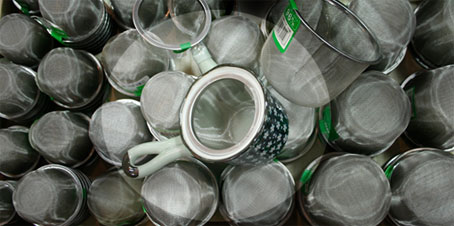

Some tea connoisseurs prefer ceramic strainers, especially for high-quality teapots, because they feel that stainless steel may affect the taste of the tea. Others prefer stainless steel for convenience, especially when brewing deep-steamed fukamushi tea. The best choice depends on the tea, the teapot, and personal preference.
Built-in Ceramic Strainers
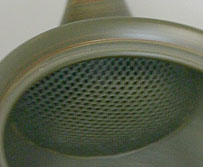
Built-in ceramic strainers are made from the same material as the teapot and attached during the manufacturing process. Because the strainer is fixed near the spout, there is more open space inside the pot, allowing tea leaves to open and circulate freely during brewing.
The size and number of holes vary depending on the maker, the period, and the intended tea style. Older teapots may have larger perforations, while more recent teapots often use finer holes to suit modern Japanese teas.
Fukamushi deep-steamed tea can be challenging for ceramic strainers. Because fukamushi leaves are very fine and soft, they tend to adhere easily to ceramic filters, particularly during the second infusion. Hole size, pouring technique, and personal preference all play important roles.
How to Choose a Japanese Kyusu
When choosing a Japanese teapot, consider the type of tea you drink most often, the number of people you usually serve, the size of your teacups, and whether you prefer traditional ceramic filters or practical stainless steel strainers.
For everyday sencha, a Tokoname kyusu of around 200–300ml is often a practical starting point. Smaller teapots are suitable for gyokuro and high-grade sencha, while larger teapots are useful for houjicha, bancha, or serving several people.
For more detailed guidance, please see our dedicated page: How to Choose a Japanese Kyusu Teapot.
Japanese Teapots at Artistic Nippon
Artistic Nippon specializes in handmade Japanese teaware selected from pottery regions throughout Japan. Tokoname kyusu are our main focus, but we also introduce Banko, Hagi, Arita porcelain, and other teapots when they offer genuine quality and practical appeal.
Many of our teapots are one-off or small-batch pieces. Even when a particular teapot has sold, archived examples may remain useful as references for clay, shape, firing, and the work of individual craftsmen.