Tokoname Ceramic Mesh Filter “Sasame”

A traditional built-in ceramic filter used in handmade Japanese kyusu teapots

Tokoname kyusu teapots are highly regarded for their craftsmanship, balance, clay quality, and excellent pouring performance. One of their most important practical features is the built-in ceramic mesh filter known as sasame.

Unlike removable metal strainers, a sasame filter is made from clay and attached inside the teapot before firing. It allows more open space inside the pot so that tea leaves can open and circulate freely during brewing.

Small and simple as it may appear, the sasame filter plays an important role in the practicality and popularity of Tokoname teapots.

What Is a Sasame Filter?

A sasame filter is a fine ceramic mesh filter fitted inside a Tokoname kyusu near the spout. It strains the tea leaves while allowing the brewed tea to pour smoothly into the cup.

Because it is made from the same clay body as the teapot, it preserves the traditional appearance of the kyusu and avoids the need for a separate removable strainer.

Many tea connoisseurs appreciate ceramic filters for their traditional character and natural compatibility with handmade Japanese teapots.

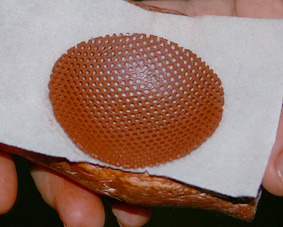
Clay disc used to make a Tokoname sasame ceramic mesh filter
Clay disc before the mesh pattern is formed

How Sasame Ceramic Mesh Filters Are Made

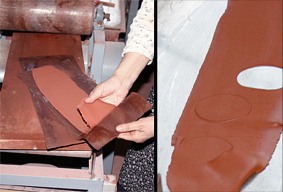
The photographs below show how sasame ceramic mesh filters are made at Shoryu kiln in Tokoname.

  1. Circles are cut out of long, thin strips of clay.
  2. The mesh pattern is created by placing the clay disc in a press machine.
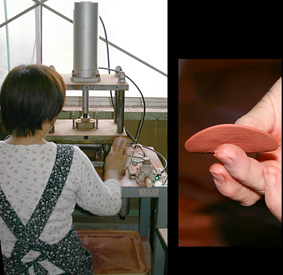
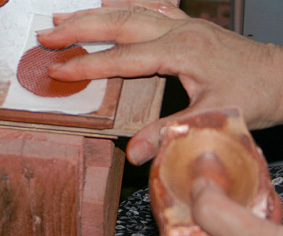
Hand tool shaping a Tokoname sasame filter into a concave form
Shaping the mesh into a concave form

Shaping and Attaching the Filter

  1. The mesh is molded into a concave shape with a hand-held tool.
  2. The completed filter is attached inside the teapot before firing.

Although this process may look simple, careful adjustment is required. The filter must be shaped and positioned correctly so that tea pours smoothly and the inside of the teapot remains practical for brewing.

Why Sasame Filters Are Valued

A well-made sasame filter provides a good balance between tea flow and leaf retention. The wide surface of the filter helps reduce clogging, while the fine holes allow the tea to pour smoothly.

For many types of Japanese green tea, sasame filters are practical, attractive, and easy to use. They are also part of the refined craftsmanship that makes Tokoname kyusu so highly regarded.

Fukamushi deep-steamed tea can be challenging for ceramic filters. Because fukamushi leaves are very fine and soft, they tend to adhere easily to ceramic filters, particularly during the second infusion. Hole size, pouring technique, and personal preference all play important roles.

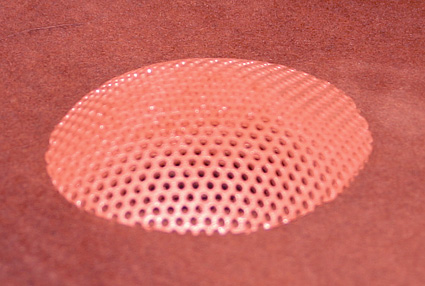
Finished Tokoname sasame ceramic mesh filter installed inside a kyusu teapot
Finished sasame filter installed inside a Tokoname kyusu

Sasame and Tokoname Kyusu Craftsmanship

The sasame filter is one example of the careful attention to practical detail found in Tokoname teapots. A good kyusu is not only judged by its exterior form, but also by how comfortably it handles, how smoothly it pours, how well the lid fits, and how effectively the filter works during daily use.

This combination of beauty and functionality is one of the reasons Tokoname kyusu remain highly respected among Japanese tea drinkers.