Inside the Workshop of Tokoname Craftsman Konishi Yohei

Konishi Yohei Profile

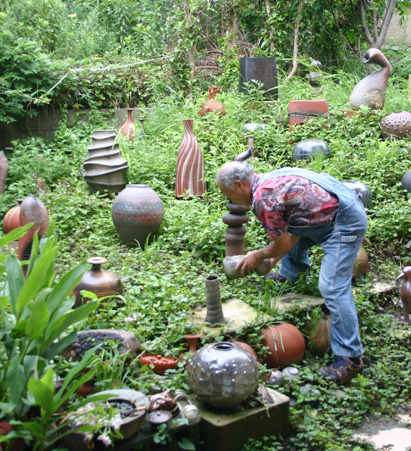
Garden and ceramic works at the workshop of Konishi Yohei in Tokoname
Ceramic works placed among the greenery at Konishi Yohei's workshop.

In June 2009, I had the opportunity to visit the workshop of Tokoname craftsman Konishi Yohei.

Having previously seen photographs of his work in books and exhibitions, I thought I was already familiar with his pottery. However, visiting his home and workshop revealed a much broader world of creativity than I had imagined.

Ceramic works greeted visitors throughout the entrance area, while the garden itself seemed to function as an outdoor gallery where pottery and nature coexisted in harmony.

Konishi Yohei appears to prefer the title of “craftsman” rather than “artist”. Yet his work reflects both qualities: a craftsman devoted to mastering his materials and techniques, and a creator driven by curiosity and imagination.
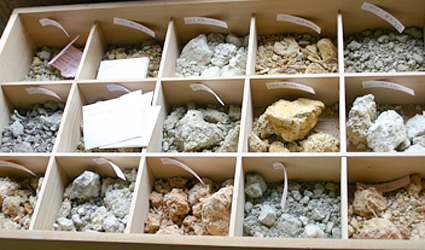
Tokoname craftsman Konishi Yohei preparing local clay
Konishi Yohei working with local clay.

Collecting and Preparing Local Clay

After more than five decades of pottery making, Konishi Yohei continues to experiment with local clays collected around Tokoname.

He regularly explores the surrounding countryside, gathering small samples of clay and testing their characteristics.

Grass, stones, and other impurities are removed by hand before the clay is repeatedly processed into a usable material.

The process is time-consuming, but it allows him to work with clays that possess distinct local character.

Even today, he admits to being surprised by the different qualities and possibilities of individual clays. The search for new discoveries seems never-ending.

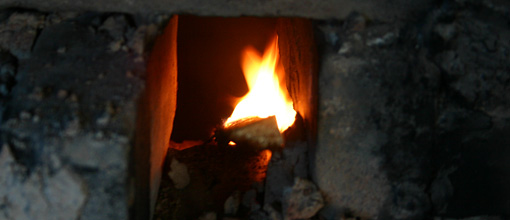
Anagama wood-fired kiln with Konishi Yohei
Anagama wood-fired kiln with Konishi Yohei.

Anagama Wood-Fired Kiln

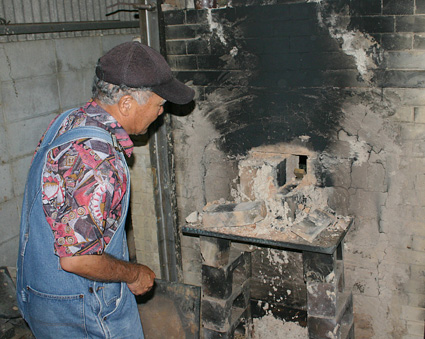
Many of Konishi Yohei's wood-fired pieces are fired in the anagama kiln shown here.

Firing continues for approximately three days and requires constant attention throughout the process.

The kiln must be monitored continuously, making wood firing one of the most demanding forms of ceramic production.

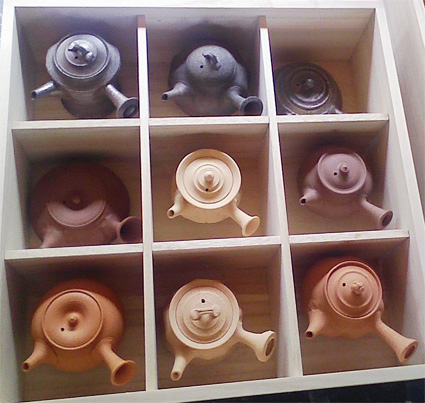
Sample Tokoname teapots by Konishi Yohei showing different clays and firing methods
Sample teapots showing different clays and firing methods.

Comparing Clay and Firing Methods

The local clay used by Konishi Yohei is precious because of the time required to collect and prepare it.

For this reason, he often prefers making two smaller teapots rather than one large teapot from the same amount of clay.

Each teapot shown here was made from a single type of clay.

The top row was fired in an anagama kiln, the middle row under reduction firing, and the bottom row under oxidation firing.

These sample teapots were created as reference pieces for museums and libraries, helping preserve knowledge for future generations.

Tokoname teapots and ceramic works by Konishi Yohei
Tokoname teapots and ceramic works by Konishi Yohei.

The Value of Traditional Knowledge

One of the most memorable aspects of my visit was seeing how much knowledge is contained within seemingly simple objects such as a teapot.

From clay selection and preparation to firing techniques and form, each stage reflects decades of accumulated experience.

These photographs offer a small glimpse into the world of Konishi Yohei and the traditions that continue to shape Tokoname pottery today.

Related Guides and Collections