How Handmade Tokoname Kyusu Teapots Are Crafted at Hokujo Kiln

A visit to Hokujo Kiln in Tokoname and a closer look at traditional Japanese teapot making

Exterior of Hokujo Kiln in Tokoname, Japan
Hokujo Kiln in Tokoname

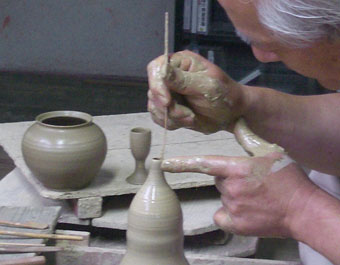
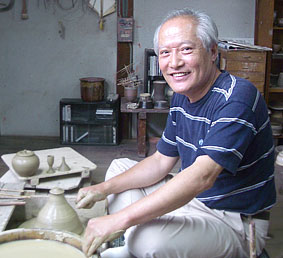
In June 2007, I had the opportunity to visit Mr. Shimizu Genji of Hokujo Kiln at his workshop in Tokoname. After sharing tea and conversation, he kindly demonstrated his hand-throwing techniques on the potter’s wheel.

This page offers a rare behind-the-scenes look at how quality Tokoname kyusu teapots are formed, assembled, dried, and prepared for firing.

Tokoname kyusu are admired not only for their appearance, but also for their lightness, balance, lid fit, smooth pouring, and practical usability in daily green tea brewing.
Wheel Throwing a Tokoname Kyusu

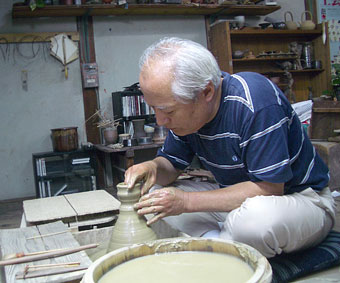
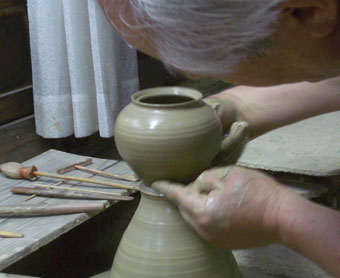
A skilled Tokoname craftsman can form the main parts of a kyusu directly on the potter’s wheel. The body, handle, spout, and lid are created with careful attention to proportion, thickness, and balance.

Watching the process is mesmerizing. What appears effortless is the result of many years of training, experience, and sensitivity to the clay.

Wheel throwing process for a handmade Tokoname kyusu
Wheel throwing a handmade Tokoname kyusu

Lightness and Balance

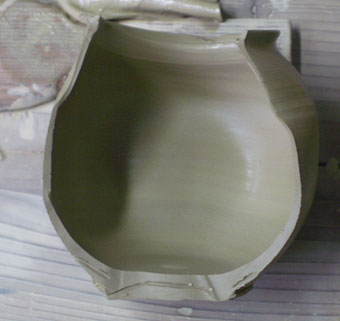
Cross section showing the thin walls of a handmade Tokoname kyusu
Cross section of a teapot body

A good Tokoname kyusu should be both attractive and functional. Hokujo’s teapots are much lighter than they may appear, because the weight of the water is taken into consideration during the making process.

The thinness of the walls helps create a teapot that feels comfortable in the hand and easy to use. During firing, excess moisture is expelled and the clay body shrinks further.

This balance between thinness, strength, and usability is one of the marks of a highly skilled teapot maker.

Not all Tokoname teapots are made in the same way. Some craftsmen intentionally make thicker teapots to achieve a particular form, texture, firing effect, or sense of presence.

Drying Before Firing

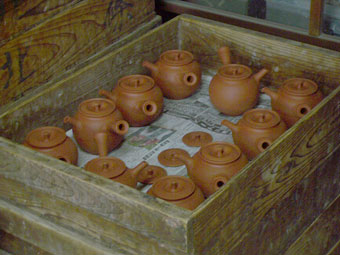
Handmade Tokoname kyusu teapots drying before firing
Drying Tokoname kyusu before firing

Once the teapots are assembled, they must be dried carefully before firing. If they dry too quickly, the joined parts may separate or crack.

At Hokujo Kiln, the drying process is slowed by placing the teapots in wooden boxes for several days. This quiet stage is one example of the time and care invested in making high-quality Tokoname kyusu.

Extra Photos from Hokujo Kiln

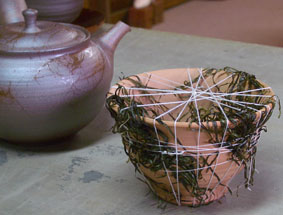
The following photographs show additional views from Hokujo Kiln and the teapot-making process.

Hokujo and the Tradition of Tokoname Teapots

Tokoname is one of Japan’s most important pottery regions for kyusu teapots. The tradition combines practical function with refined craftsmanship, producing teapots that are made to be used and appreciated in daily tea life.

Hokujo’s work reflects this tradition. His teapots are valued for their clean forms, fine balance, carefully considered details, and suitability for brewing Japanese green tea.

Related Guides and Collections